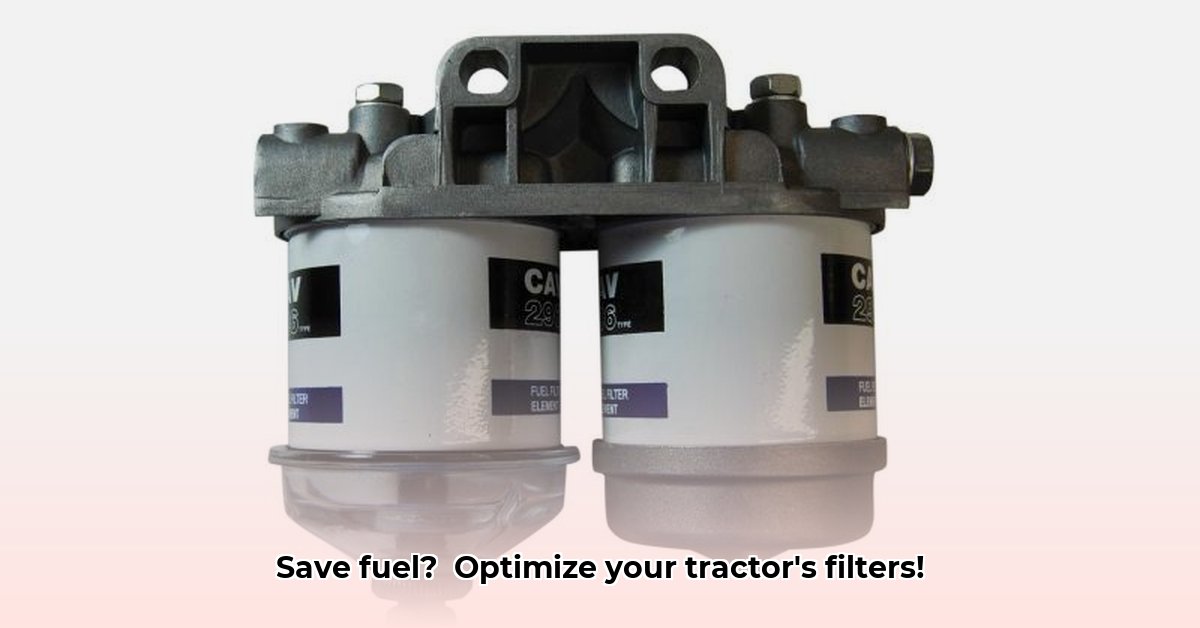
Understanding Tractor Fuel Filters and Their Impact on Sustainable Agriculture
Keeping your tractor running smoothly is paramount for efficient and sustainable farming. A critical component of this is maintaining clean and functional fuel filters. These often-overlooked components play a significant role in both your farm's economic viability and its environmental footprint. This guide provides actionable steps for selecting, installing, and maintaining tractor fuel filters, ultimately boosting your farm's efficiency. For larger fuel storage needs, consider options like fuel transfer tanks.
Dirty fuel, containing contaminants like dirt, rust, water, and microorganisms, can seriously damage your tractor's engine. This leads to reduced power, costly repairs, and downtime – all impacting your farm's profitability and sustainability. Regular fuel filter maintenance acts as an inexpensive insurance policy, preventing these problems. "A few dollars spent on a new filter can save you hundreds, even thousands, on repairs," says Dr. Anya Sharma, Agricultural Engineer at the University of California, Davis.
Choosing the Right Tractor Fuel Filter
Selecting the appropriate fuel filter isn't a matter of simply choosing the cheapest option. Several factors determine the best choice for your specific needs:
Fuel Type: Diesel, gasoline, and biofuels each require differently designed filters. Using the wrong filter can lead to reduced efficiency or even damage.
Micron Rating: This rating indicates the filter's ability to remove particles. Lower micron ratings mean finer filtration, but this can sometimes restrict fuel flow. Consult your tractor's manual for the recommended micron rating. "Finding the right balance between filtration and flow rate is critical," notes Professor David Miller, Professor of Agricultural Engineering at Purdue University.
Filter Material: The material used in the filter can also influence its performance and environmental impact. Some manufacturers offer filters made from sustainable, biodegradable materials, minimizing waste. While potentially more expensive upfront, the long-term environmental and economic benefits should be considered.
Supplier Reputation: Source your filters from reputable suppliers to ensure quality and compatibility. Using a substandard filter is a risk you shouldn't take.
Don't forget: Regular maintenance is cheaper than major repairs! How often should you check your filters?
Step-by-Step Fuel Filter Replacement
Replacing a tractor fuel filter is a relatively straightforward process, but safety is crucial. Always ensure your tractor is turned off and the fuel system depressurized before beginning. Refer to your tractor's owner's manual for specific safety precautions and instructions.
Gather Tools: You'll need a wrench (or socket) fitting your filter housing, a clean container for spilled fuel, absorbent cloths, and your new fuel filter.
Locate Filter: The filter's location varies by tractor model. Refer to your owner's manual.
Loosen Filter: Carefully loosen the filter using your wrench, taking care to avoid spills.
Remove Old Filter: Remove the old filter and observe its condition. Significant debris suggests a filter change was long overdue.
Prepare New Filter: Lightly lubricate the new filter's rubber gasket with clean engine oil for a better seal.
Install New Filter: Screw the new filter into the housing, tightening securely but not over-tightening.
Check for Leaks: After installation, carefully check for leaks around the filter and connections.
Restart Tractor: Once you're satisfied there are no leaks, restart the tractor and verify the fuel level. Is your fuel efficiency noticeably improved?
Preventative Fuel Filter Maintenance
Regular filter changes are essential, but preventative measures can extend their lifespan and reduce the frequency of changes.
Fuel Storage: Store fuel in clean, sealed containers to prevent contamination.
Tank Inspections: Regularly inspect your fuel tank for water or debris. Water promotes microbial growth.
Fuel Additives: Consider using fuel additives to prevent contamination and improve fuel quality, especially in areas with lower-quality fuel. This is especially important for older tractors. Have you considered these additional steps?
These strategies protect your investment and promote a more sustainable operation.
The Economic and Environmental Benefits of Proper Fuel Filter Maintenance
Proper filter maintenance offers significant economic and environmental benefits. Minimizing downtime, maximizing fuel efficiency, and reducing engine wear all contribute to increased profitability. Additionally, using sustainable filters reduces waste. These are critical aspects of sustainable agriculture. Moreover, certain governments may offer incentives for adopting sustainable agricultural practices.
By proactively maintaining your tractor's fuel filters, you are directly contributing to more efficient and environmentally responsible farming practices. It's a small investment with a significant return on investment. Does your current approach adequately address these benefits?
Key Takeaways:
- Regular fuel filter maintenance is crucial for efficient tractor operation.
- Proper filter selection extends tractor lifespan and reduces environmental impact.
- Preventative measures like fuel storage and tank inspection minimize contamination.
- Choosing high-quality filters prevents costly repairs and maximizes fuel efficiency.
- Sustainable farming practices include efficient and responsible fuel management.
This detailed guide provides a comprehensive approach to optimizing tractor fuel filter maintenance, significantly improving both the effectiveness and sustainability of your farm operations.